How to Create a Zoning Map for Your Home or Office
How to Create a Zoning Map for Your Home or Office
Start with the room and its activities
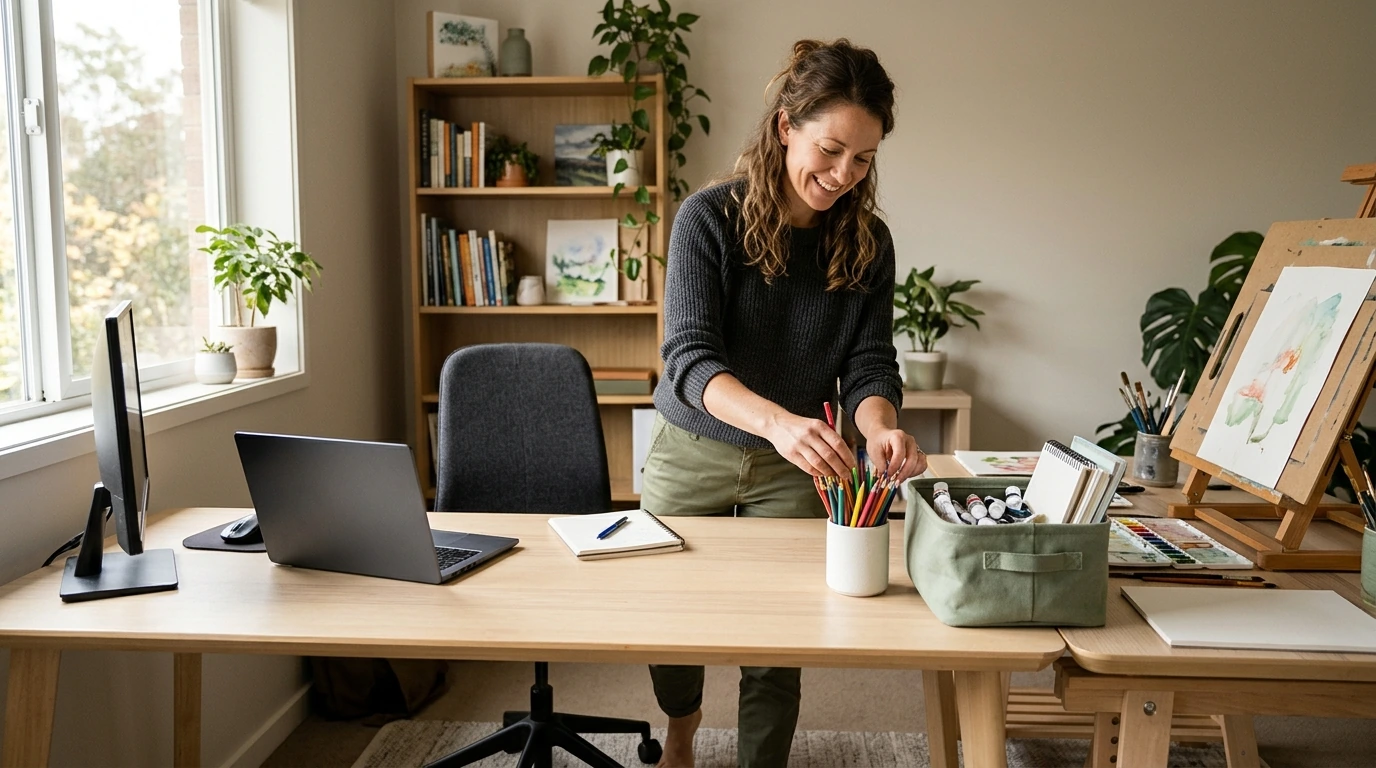
Sketch the room’s outline and add fixed features such as doors, windows, outlets, and built-in storage; rough proportions are enough for an initial plan, although measurements help when you need to fit furniture into a tight space. List the activities you want the room to support, such as focused work, video calls, reading, crafting, or storing supplies, and note which activities need quiet, light, or easy access to equipment.

Assign a place to each zone
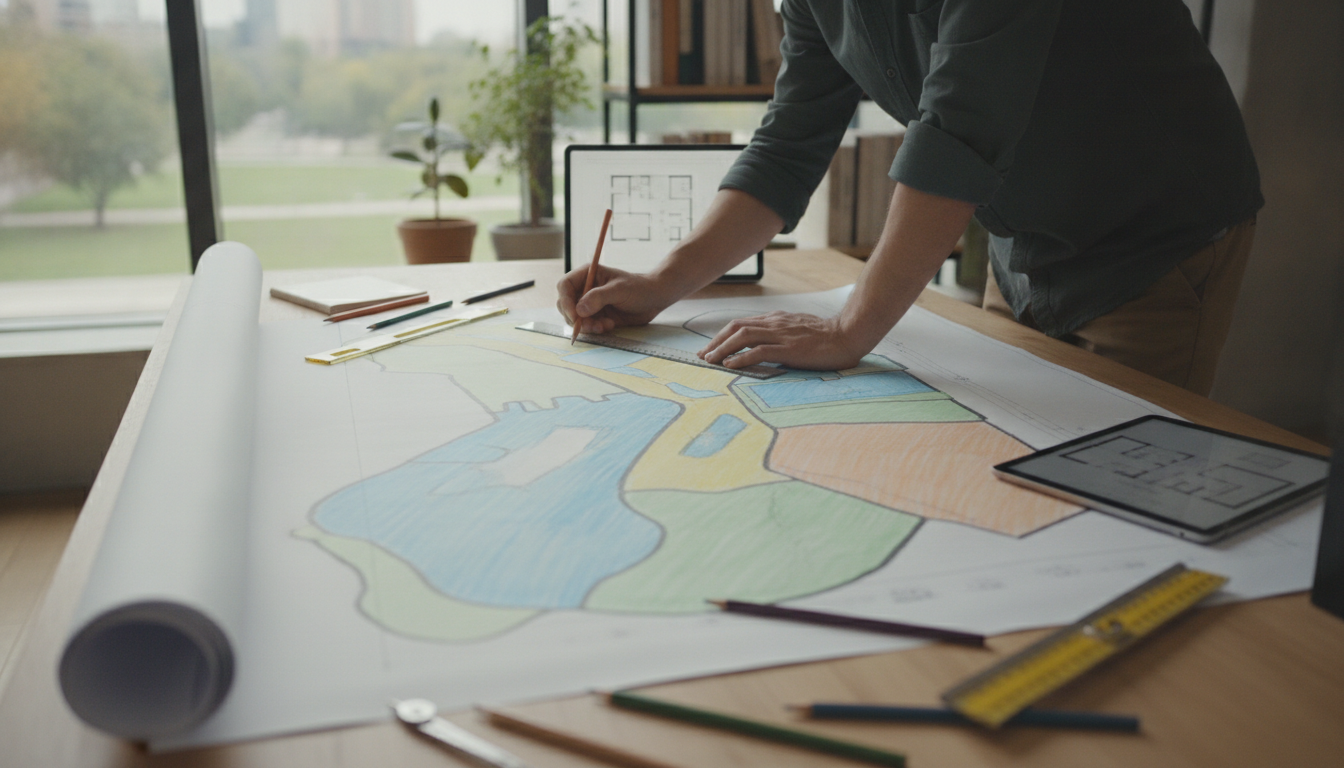
Mark an area for each activity, using colors, labels, or patterns to distinguish zones; a desk near an outlet might become a work zone, while a comfortable chair and lamp could mark a reading zone. Keep frequently used supplies close to their activity and leave clear paths to doors and shared items, remembering that a small room can use the same surface for more than one purpose at different times.
Featured in this guide
The Ultimate Checklist for Creating Activity Zones | Printable Home & Office Organization Guide | How to Create Zones for Different Activities | Digital Download
Choose how to draw your map
For a quick paper map, use a pencil, ruler, and colored pens so you can move or relabel areas as your plans change; graph paper can also help you represent furniture and room dimensions consistently. For a digital map, use a free drawing or presentation tool with shapes and text boxes, save a copy you can edit, and add a simple key explaining the colors or patterns you choose.
Test and refine your layout
Use the room with your proposed zones in mind and notice where supplies pile up, walkways feel crowded, or competing activities interrupt one another; then move the boundaries or swap locations rather than treating the first map as final. Our team’s Ultimate Checklist for Creating Activity Zones is a printable home and office organization guide you can use alongside your map as you plan zones for different activities.
FAQ
How to make a zoning map?
Draw the room, mark its doors and other fixed features, and label the activities you want to accommodate. Divide the plan into activity areas, using colors or patterns to make each zone easy to recognize.
How can I create my own map for free?
Draw your map with paper and a pencil, or use the shapes and text tools in a free digital drawing or presentation application. Label each zone and revise the map whenever your activities or furniture arrangement change.
See if The Ultimate Checklist for Creating Activity Zones | Printable Home & Office Organization Guide | How to Create Zones for Different Activities | Digital Download fits your setup


Leave a comment