
Cabinet Safety for Kids: A Room-by-Room Checklist
35% off on product page · save $5.38
Cabinet Safety for Kids: A Room-by-Room Checklist
Start With a Child’s-Eye View
Get down to your child’s height and look around each room. Notice which cabinet doors are easy to reach, which handles are tempting to pull, and whether nearby furniture or cabinet features could make climbing easier. Include the kitchen, bathroom, laundry area, and any other space your child visits.
Open each accessible cabinet and take an inventory. Look beyond the obvious cleaning supplies: a low drawer might hold scissors, while a bathroom cabinet could contain medicines or cosmetics. Check whether each door closes properly and whether an existing latch is loose or damaged.
Prioritize cabinets containing dangerous items and those your child can reach now. A cabinet that seems inaccessible today may become reachable as your child grows, learns to climb, or finds a new way to explore.
Make Your Room-by-Room Plan
Our printable digital checklist helps you organize a cabinet-by-cabinet review and note actions still to complete. Start with the rooms your child uses most, then work through the rest of your home.
- Kitchen: Look for knives, cleaning products, and dishwasher packets. Secure hazards and check cabinet latches.
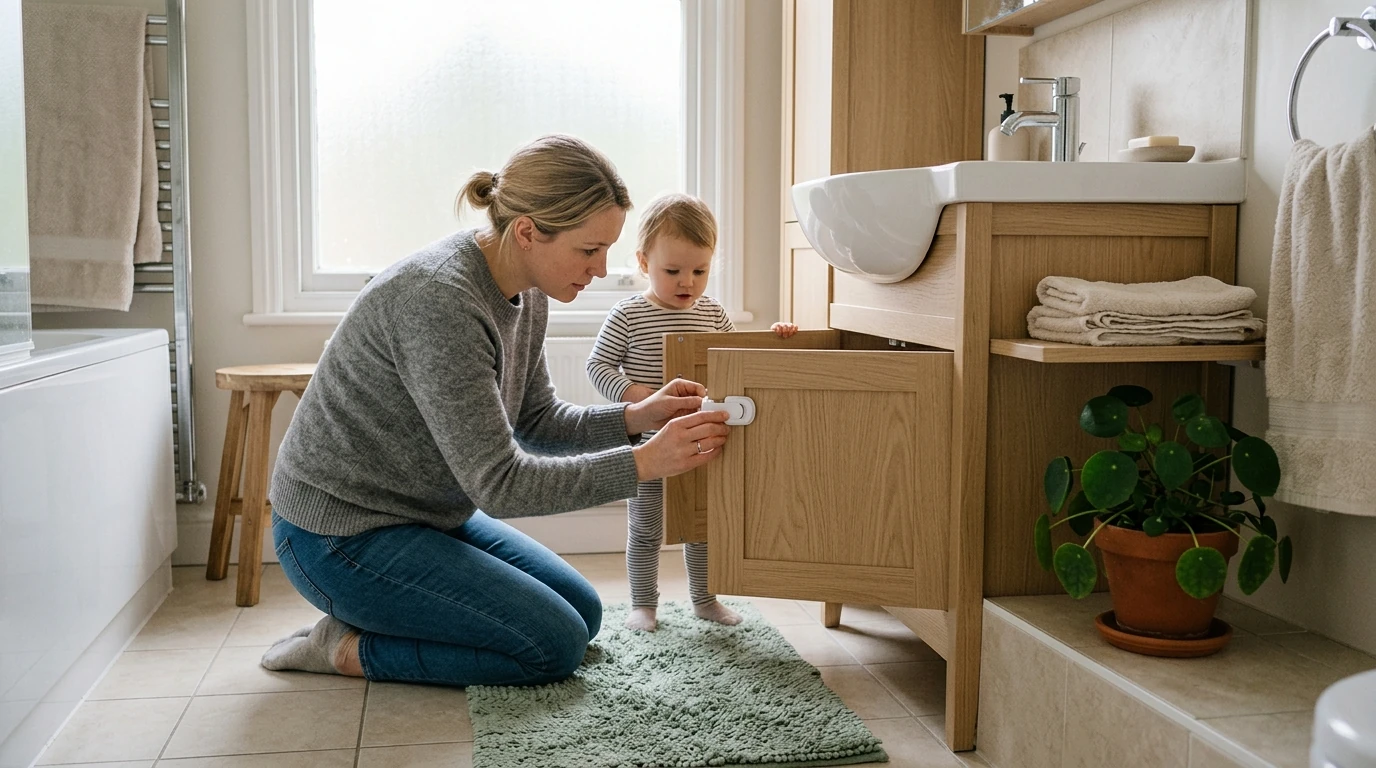
- Bathroom: Review medicines, cosmetics, and cleaning products. Keep medicines and chemicals up high, out of sight, and locked.
- Laundry area: Keep detergent packets and cleaning chemicals in their original containers in locked storage.
- Other rooms: Look for tools, batteries, and small objects; move them out of reach and secure their storage.
Featured in this guide
Cabinet Safety for Kids Checklist | Child Safety for Cabinets Digital Download | Printable Home Safety Guide for Parents
Store Hazards Safely
Keep medicines, cleaning products, dishwasher and laundry packets, and other chemicals up high, out of sight, and in locked storage. Leave them in their original containers so labels and safety instructions remain available. Never pour chemicals into food or drink containers.
Check under sinks, near the dishwasher, and in utility rooms and garages. Return medicines and cleaning supplies to locked storage immediately after use. Secure knives, sharp tools, batteries, and small objects where children cannot reach them.
Choose and Check Cabinet Locks
Compare latches with your cabinet’s door and handle design, material, and available installation space. A latch made for paired handles may not suit a handleless door, and some hardware may require drilling. Follow the manufacturer’s installation instructions.
Close the door fully and test that the latch engages. Check it each time you close the cabinet, and test regularly for looseness or damage. Repair or replace a latch that no longer works as intended.
Keep the Checklist Useful as Children Grow
Use it to organize a cabinet-by-cabinet review and note actions you want to complete, such as moving supplies or replacing a loose latch.
Revisit your review when you bring home new products, change how a room is used, or notice new reaching and climbing skills. Our team also offers the Talk & Connect: Parent-Child Communication Workbook for families looking for conversation starters and ways to support connection alongside their everyday routines.
Before choosing, compare the product details with your daily routine, available space, care needs, and preferred setup. The strongest option is usually the one that fits the intended use clearly and remains simple to clean, store, and check before repeat use.
It is also worth checking measurements, material notes, included parts, and compatibility details so the item matches the way it will be used after delivery.
Before choosing, compare the product details with your daily routine, available space, care needs, and preferred setup. The strongest option is usually the one that fits the intended use clearly and remains simple to clean, store, and check before repeat use.
FAQ
How to childproof your cabinets?
Review cabinet contents, move hazards to locked storage out of children’s reach, and install suitable latches. Check the latches regularly and continue to supervise children.
How can I childproof my kitchen cabinets?
Identify hazards such as knives, cleaners, and dishwasher packets, then move them to locked storage out of children’s reach. Install suitable cabinet latches and check that they work regularly.
How can I childproof my cabinet doors?
Choose a latch compatible with the door and cabinet, install it according to the manufacturer’s directions, and make sure it engages whenever the door closes.
What are the best child safety locks for cabinets?
The best fit depends on your cabinet’s doors, handles, material, and installation needs. No lock replaces supervision or safe storage.
See if Cabinet Safety for Kids Checklist | Child Safety for Cabinets Digital Download | Printable Home Safety Guide for Parents fits your setup


Leave a comment