35% off on product page · save $5.38
Child-Proof Cabinet Locks: Options and Safety Tips
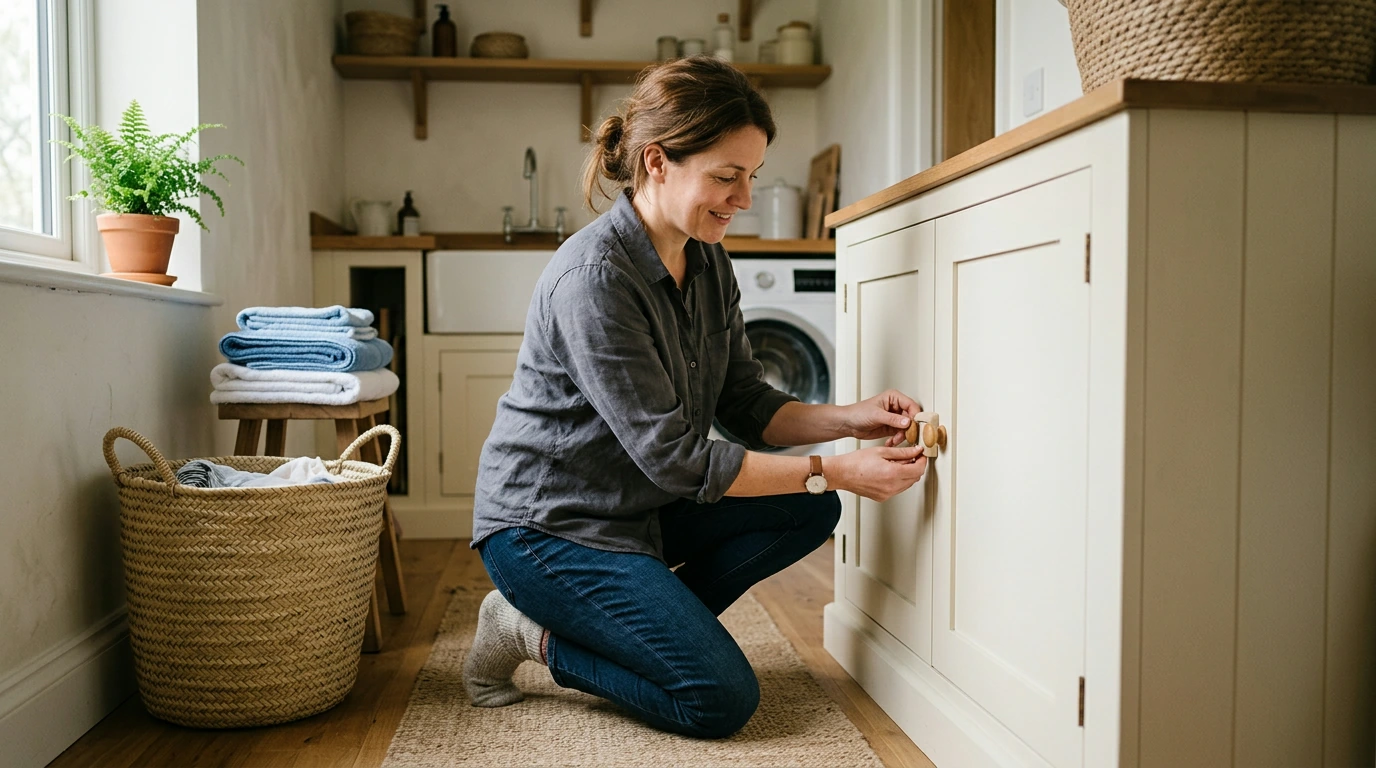
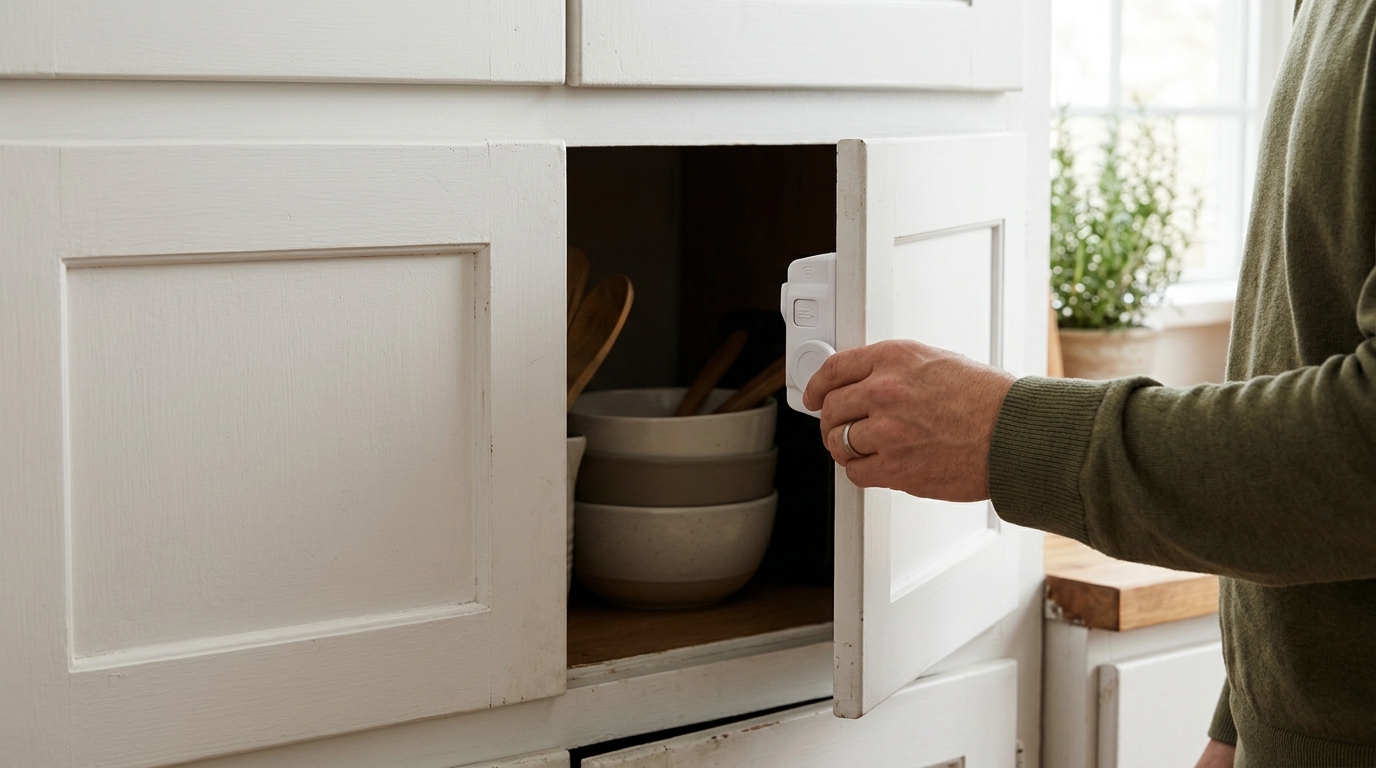
Some good child-proof options include magnetic locks mounted inside the cabinet, adhesive strap locks that wrap around handles or doors, and spring latches that catch when a door is opened. We recommend starting with the cabinet’s construction: Look at whether it has knobs, handles, drawers, or doors without hardware, and consider how much clearance you have for a latch.
Check the product’s listed specifications when evaluating choose a lock that fits your cabinets.
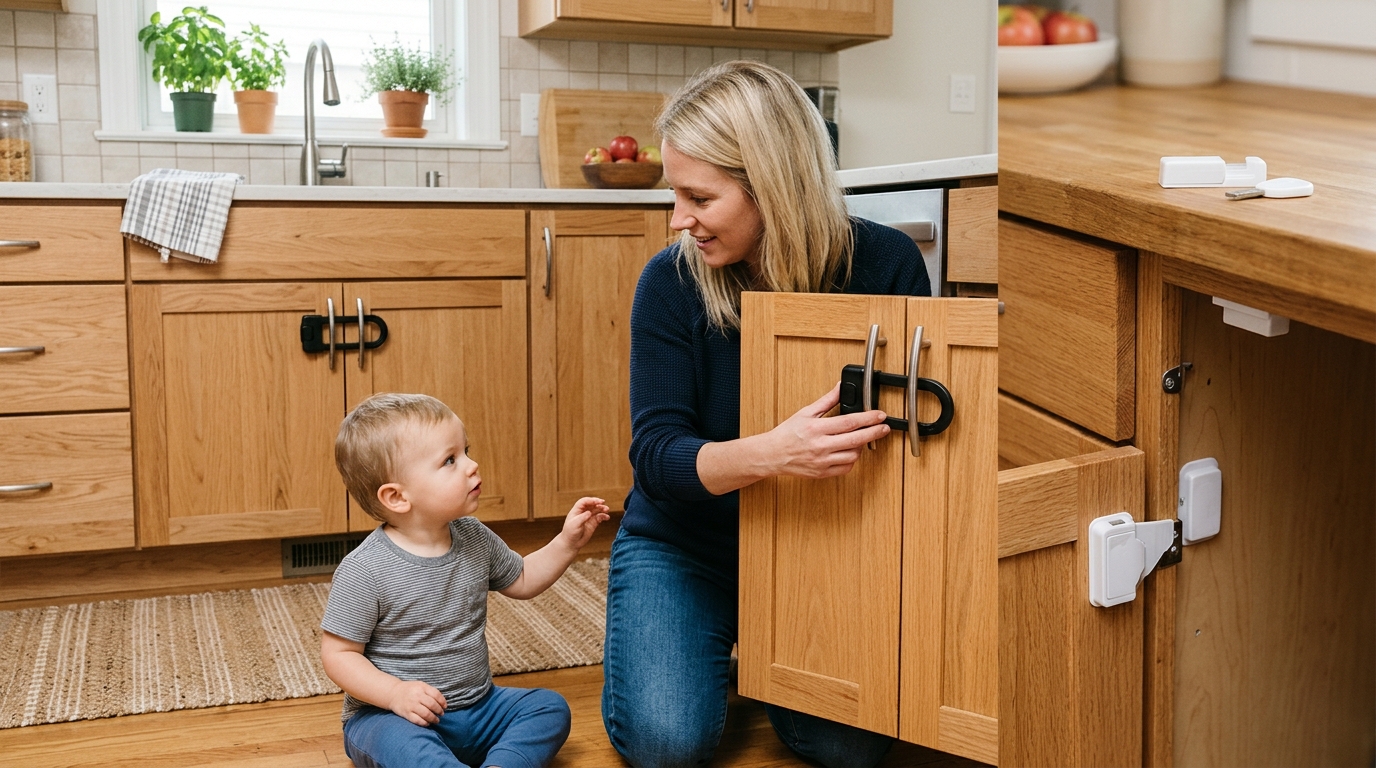
Magnetic locks are a useful choice if you want the hardware hidden inside the cabinet, although you’ll need to keep the magnetic key accessible to adults and out of your child’s reach. Spring latches can be convenient for frequently used cabinets because they don’t require a separate key, but the door may open slightly before the latch catches, so consider whether little fingers could be pinched.
Featured in this guide
Cabinet Safety for Kids Checklist | Child Safety for Cabinets Digital Download | Printable Home Safety Guide for Parents
Adhesive strap locks can work on some cabinets and drawers where drilling isn’t practical, while sliding locks or flexible loops can be a straightforward option for paired cabinet handles or knobs. Before choosing either style, measure the spacing and shape of the hardware, follow the installation instructions, and test that your child cannot pull the doors open or remove the lock.
The best choice depends on your cabinet design and how you use it: Magnetic locks keep hardware hidden, while spring latches and handle locks offer different ways to secure doors. Choose a lock that fits securely, is manageable for adults, and stays closed when you test it.
Start by moving hazardous items out of reach, then install suitable locks on cabinets and drawers your child can access. Check the locks regularly for loose hardware, worn adhesive, or damage, and replace them when they no longer hold securely.








Leave a comment