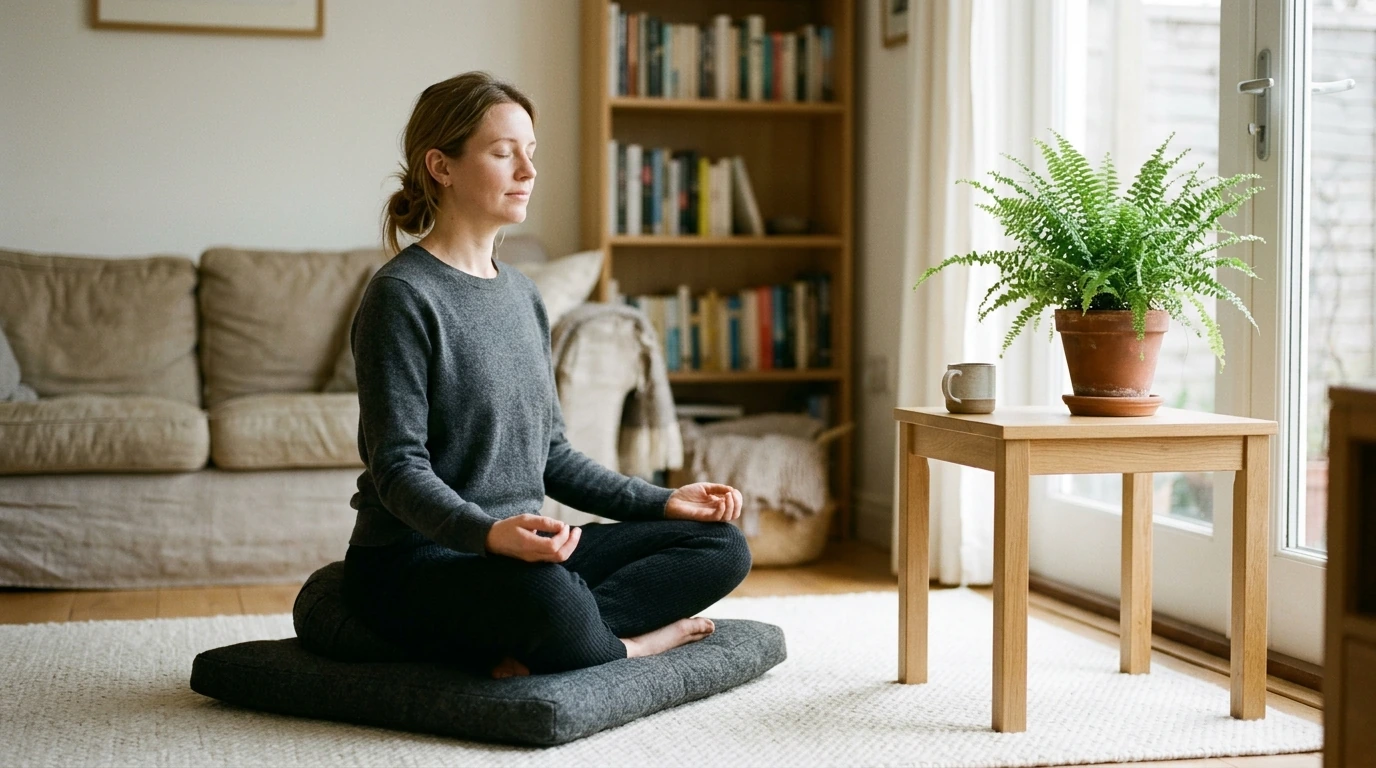
Mindfulness Meditation Made Simple: A Beginner’s Guide
Mindfulness means paying attention to the present moment with curiosity rather than immediately judging what you notice. In meditation, you might observe the feeling of your feet on the floor, a sound in the room, or a thought passing through your mind. You don’t have to change any of it.
Your attention will wander. That is normal, not a sign that you’re doing something wrong. The practice is to notice where your attention has gone and gently bring it back to whatever you’ve chosen as your anchor.
The NHS guide to mindfulness offers more ways to notice thoughts, feelings, and sensations during everyday life.
Check the product’s listed specifications when evaluating what mindfulness meditation means.
Choose a place with relatively few interruptions. Sit comfortably on a chair or cushion, or stand if that feels better. Set a timer for two or three minutes.
Let your breathing happen naturally. Notice the rise and fall of your chest or the air moving at your nose. When your attention wanders, acknowledge it and gently return to that sensation.
If focusing on your breath feels uncomfortable, feel your feet against the floor, notice where your body meets the chair, or listen to sounds around you. You can keep your eyes open and rest your gaze nearby.
When the timer ends, notice how you feel without deciding whether the session was a success.
Check the product’s listed specifications when evaluating start with a few quiet minutes.
Featured in this guide
Mindfulness Meditation Made Simple – A Beginner’s Guide to Calm & Clarity
There’s no single best way to begin. Choose an approach that feels comfortable and fits a natural pause in your day.
For mindful walking, choose a safe, familiar place and keep enough attention on your surroundings. If you prefer sitting, notice your weight supported by the chair.
Check the product’s listed specifications when evaluating find a practice that fits your day.
Link practice to an existing habit, such as making your morning drink. If you feel restless, try a shorter session or switch to mindful walking. If you miss a day, begin again when you’re ready.
Meditation can feel uncomfortable or distressing for some people. You can pause, open your eyes, change activities, or seek guidance from a qualified mental health professional if you need support. Mindfulness is not a substitute for medical care.
Check the product’s listed specifications when evaluating make room for an imperfect routine.
Our Mindfulness Meditation Made Simple – A Beginner’s Guide to Calm & Clarity is an accessible starting point if you’d like support as you explore mindfulness. Choose one small practice to try, then adjust it to fit your day.
If you’re also looking for ways to build connection at home, our Talk & Connect: Parent-Child Communication Workbook offers a separate focus on family conversations and emotional connection. You can explore it alongside your personal practice if that suits your goals.
Check the product’s listed specifications when evaluating explore the beginner’s guide.
Before choosing, compare the product details with your daily routine, available space, care needs, and preferred setup. The strongest option is usually the one that fits the intended use clearly and remains simple to clean, store, and check before repeat use.
Mindfulness meditation has roots in Buddhist contemplative traditions. Today, secular forms are also practiced in many settings, including health care and education.
Research suggests mindfulness-based approaches may help with stress and some mental health symptoms, but results vary. Mindfulness is not a substitute for medical care.
There is no single best method for everyone. Try breath awareness, noticing your body, or mindful walking, and choose an approach that feels comfortable and fits your day.
Christians may approach present-moment awareness in different ways, including alongside prayer. If you have concerns about how it fits your faith, speak with a trusted faith leader.










Leave a comment