Strength at Home with Dumbbells for Small Spaces
Strength at Home with Dumbbells for Small Spaces
Make Room for Strength Training
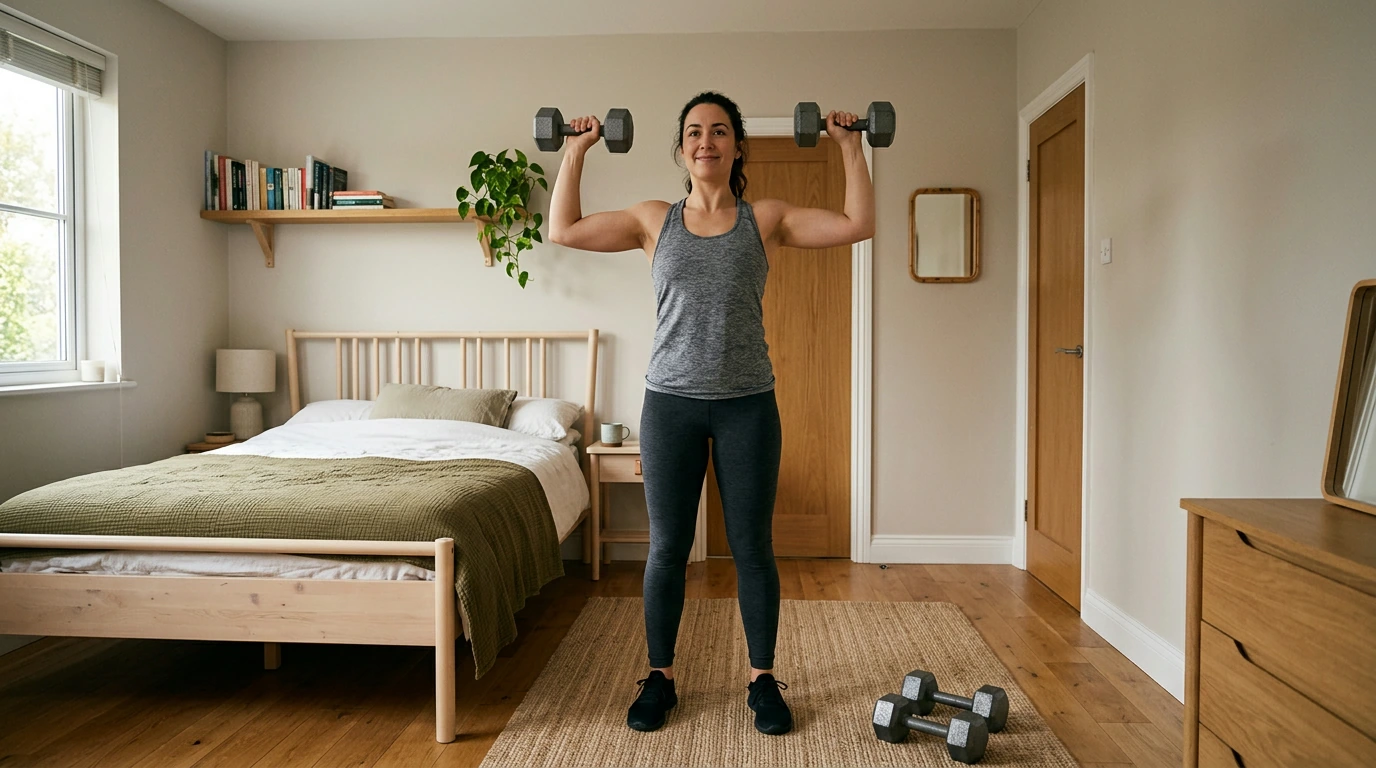
Look for a clear area where you can extend your arms, bend, and change positions without contacting furniture or walls. Move loose cords, rugs, and other trip hazards out of the way. If you plan to exercise on the floor, make sure you can lie down and get up comfortably.
A stable, non-slip surface helps you stay grounded as you move. Keep your dumbbells in a convenient spot where they will not roll into a walkway or become a tripping hazard.
Before picking up a weight, try each movement without it. Check that you can complete the range of motion comfortably and have clearance throughout. If a movement does not fit your space, adjust your position or choose another option.

Meet Our Small-Space Dumbbell Guide
Strength at Home with Dumbbells is our digital fitness guide focused on home dumbbell routines for small spaces. It offers a starting point if you want to explore strength training without a dedicated gym.
Before you begin, consider where you can move safely, where you will store your weights, and when you can reasonably set aside time for exercise.
Featured in this guide
Strength at Home with Dumbbells: Digital Fitness Guide for Small Spaces | Home Dumbbell Routines for Small Spaces
Plan Around Your Space
These are general movement ideas, not a description of what is included in our guide:
- Lower body: A dumbbell squat needs room to bend comfortably.
- Upper-body pull: A dumbbell row needs a clear area beside your body.
- Upper-body push: A floor press requires enough space to lie down and move your arms.
- Core: A suitcase hold needs space at your side to hold a weight while standing tall.
You can work toward the CDC activity guidance at a pace suited to you. Allow recovery between challenging sessions.
Check the product’s listed specifications when evaluating plan around your space.
Choose a Comfortable Starting Point
Choose a weight that lets you complete repetitions with control and maintain your form. The right weight may differ between a squat and a row. If you cannot maintain control, reduce the weight or practice without one.
Warm up with easy walking in place and comfortable, unweighted movements. Increase the challenge gradually and stop if a movement causes pain. If you have an injury, a health concern, or questions about what is appropriate for you, seek individualized advice from a qualified health professional.
Check the product’s listed specifications when evaluating choose a comfortable starting point.
Keep Your Routine Practical
Choose training times that fit your real schedule, whether that means a few quiet minutes before the day begins or a session after work. Keep your equipment accessible, while putting it away safely after each use. A simple setup can make it easier to return to your routine.
After each session, note the movements you tried, the weights you used, and how they felt. Those notes can help you notice when a weight is manageable or when you need more recovery. You can explore our digital guide on its product page as you plan your next steps.
For a different kind of home resource, our Talk & Connect parent-child communication workbook focuses on family conversations and connection. It is separate from our fitness guide and is not a substitute for professional support.

Watch · product page video
“What I appreciate most about these routines are how they help maximize minimal space while still providing an effective full body workout 👌”
Veliqua product page · Product review
FAQ
What type of abuse is most common for men?
Psychological aggression is commonly reported by men experiencing intimate partner abuse, though prevalence varies by survey and definition. Abuse can also be physical, sexual, or financial.
What percentage of IPv perpetrators are male?
There is no single reliable percentage for all intimate partner violence perpetrators; estimates vary by population, type of violence, and how incidents are measured.
What is intimate partner violence?
Intimate partner violence is abuse or aggression by a current or former intimate partner. It can include physical violence, sexual violence, stalking, or psychological aggression.
What is strength at home VA?
Strength at Home is a U.S. Department of Veterans Affairs program designed to help Veterans and service members address intimate partner violence, or IPV, and build healthier relationships. It focuses on recognizing harmful behavior, understanding triggers, and learning alternatives to aggression and control.
See if Strength at Home with Dumbbells: Digital Fitness Guide for Small Spaces | Home Dumbbell Routines for Small Spaces fits your setup


Leave a comment