
Hidden Wall Storage Ideas for a Clutter-Free Home
25% off on product page · save $2.00
Hidden Wall Storage Ideas for a Clutter-Free Home
Use the Space Between Wall Studs
A recessed cabinet between wall studs can hold toiletries, spices, books, or small household supplies without taking up floor space, making it useful in a narrow bathroom, hallway, or kitchen. We suggest choosing a shallow cabinet with a door that sits flush with the surrounding wall, then painting the door and trim to blend with the room.
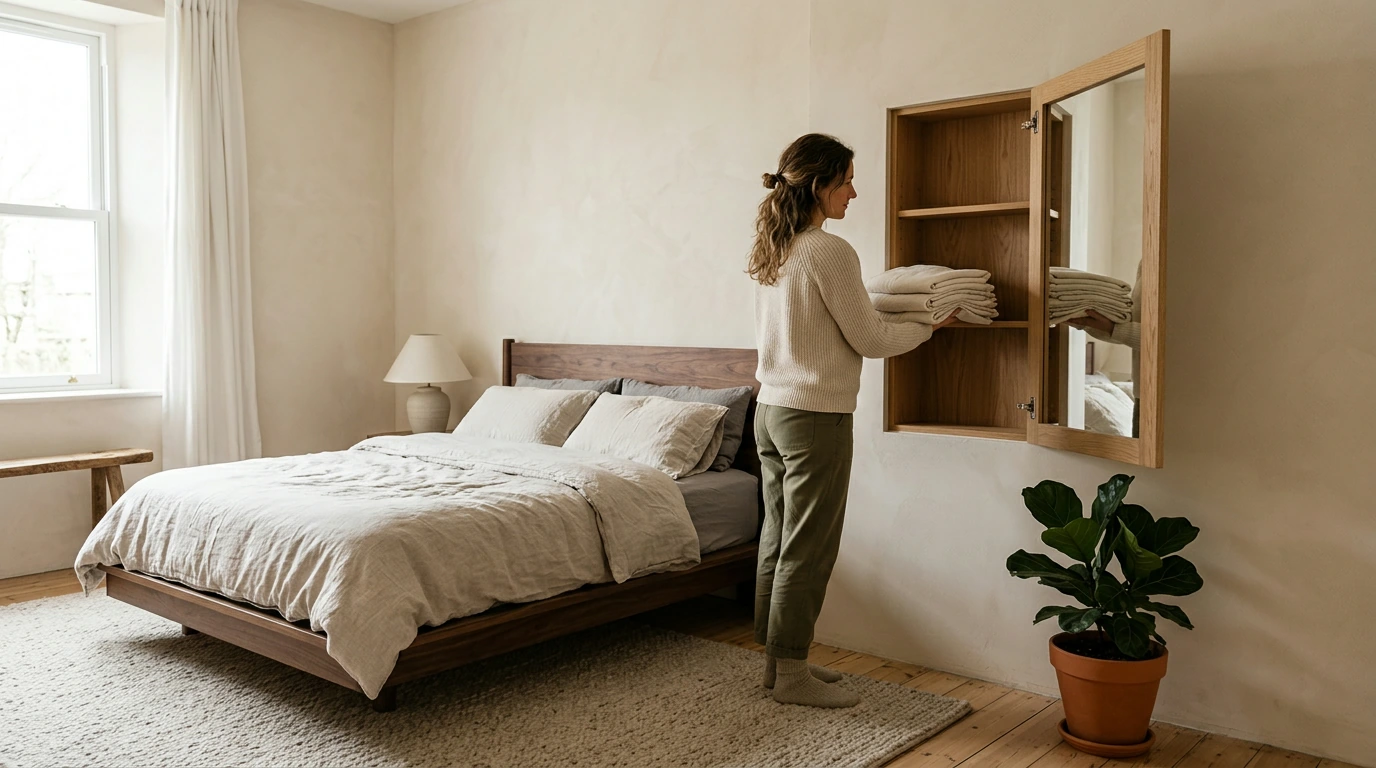
Conceal a Cabinet Behind Art or a Mirror
A hinged piece of artwork or a mirror can cover a recessed compartment while still looking like an ordinary part of your decor. This approach works well for small items you want close at hand, such as keys or everyday accessories; use sturdy hinges and a secure latch suited to the weight of the cover.
Featured in this guide
The Hidden Storage Checklist for Clever Living Areas | Digital Home Organization Guide | How to Create Hidden Storage in Living Areas
Blend Storage Into Wall Paneling
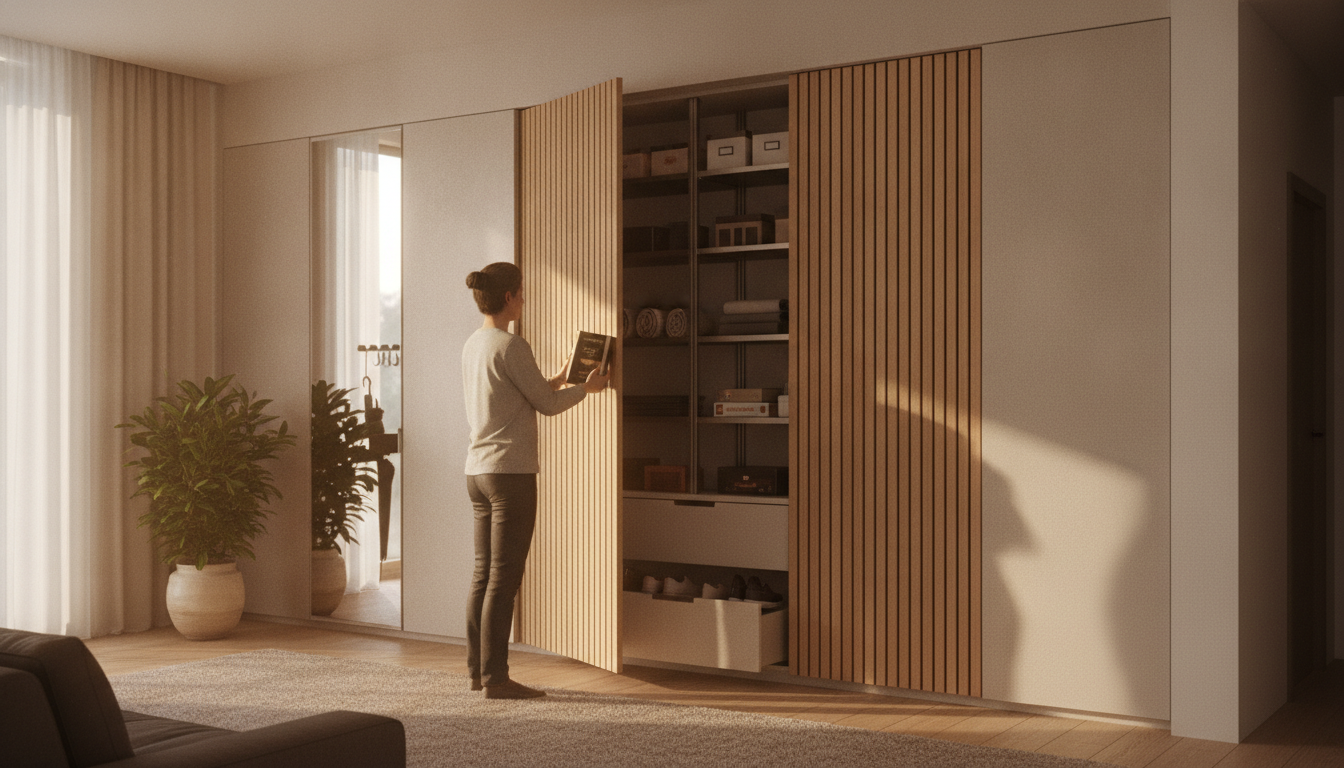
If your room has panel molding, beadboard, or another repeating wall treatment, you can disguise a shallow cabinet door within the pattern. Align the door edges with the existing seams and use matching paint or finish so the storage feels integrated rather than added on.
Make a Niche Work Harder
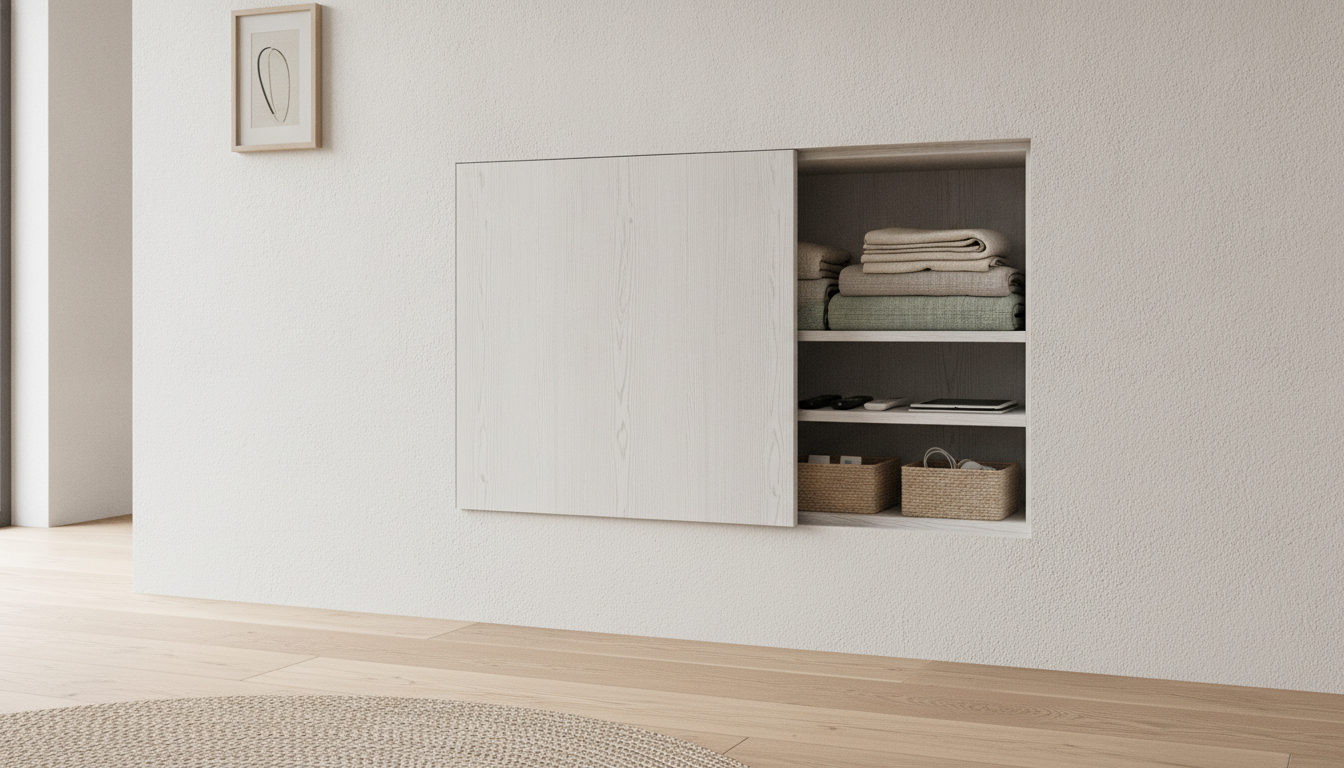
An existing wall niche can become discreet storage when you add shelves and a fitted door, sliding panel, or curtain that complements the room. We like this option when you want to keep supplies accessible without opening a new cavity in the wall; measure the niche carefully and leave enough clearance for the door or panel to move.
Plan for Access and Safety
Before cutting into a wall, identify studs and look for electrical wiring, plumbing, and other concealed systems; consult a qualified professional if you are unsure what is inside or whether the wall is load-bearing. Our team recommends planning what you want to store first, since a shallow recess may suit small supplies while larger objects may need a different storage solution.
For more planning ideas, explore our guide to hidden storage in a wall and our digital home organization guide, The Hidden Storage Checklist for Clever Living Areas.
FAQ
How to build hidden storage in a wall?
Start by choosing a location and checking the wall for studs, wiring, plumbing, and structural considerations before making any cuts. Build or fit a shallow cabinet into a suitable opening, secure it properly, and finish it with a flush door, mirror, or panel that gives you access.
See if The Hidden Storage Checklist for Clever Living Areas | Digital Home Organization Guide | How to Create Hidden Storage in Living Areas fits your setup


Leave a comment